Veneers can transform a smile, but they're not right for every patient or every situation. Understanding the real biomechanical and anatomical trade-offs — before you commit — is exactly what a specialist consultation is designed to uncover. If you're exploring your options, learning more about cosmetic dentistry can help you understand the full range of treatments available.
The Enamel Removal Question Is More Complicated Than "Just 0.5mm"
For Encino-area patients, most veneer articles mention that dentists remove approximately 0.5mm of enamel to prepare a tooth. What they don't mention is that enamel isn't uniformly thick across the entire tooth surface.
Near the gumline — the cervical margin — enamel is often less than 0.3mm thick. Removing a standard prep depth in that zone frequently exposes dentin, the softer inner layer of the tooth. This matters for two reasons.
First, bonding. Veneer cement adheres far more reliably to enamel than to dentin. When a veneer is bonded over exposed dentin at the gumline, the risk of microleakage increases — meaning bacteria, fluids, and decay-causing agents can seep beneath the veneer margin. This is the primary driver of those dark or discolored lines that sometimes appear at the base of older veneers.
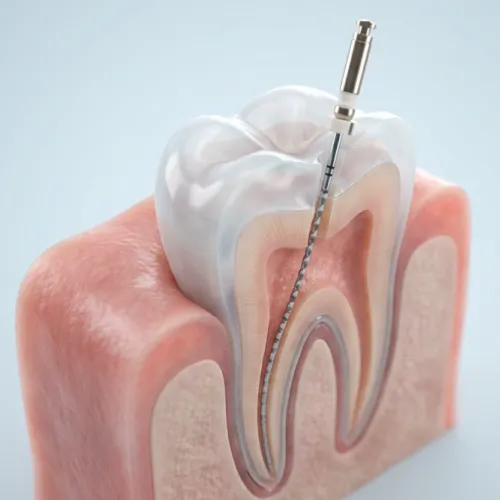
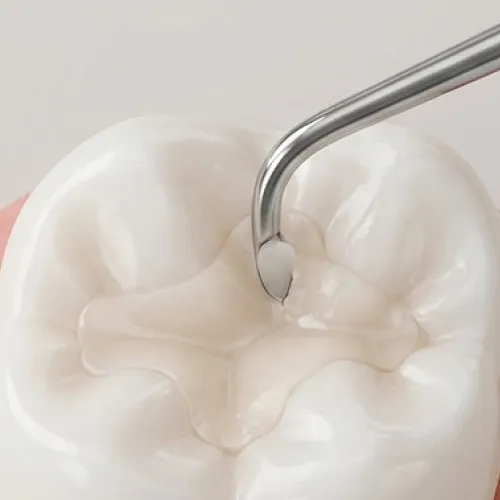
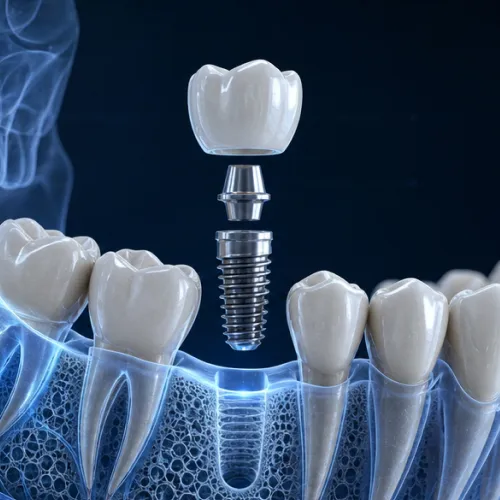
Second, sensitivity. Dentin contains microscopic tubules that connect to the nerve. Exposing dentin during preparation is one reason some patients experience significant post-procedure sensitivity, even though the procedure is marketed as minimally invasive. To better understand the anatomy involved, it helps to learn about the parts of a tooth and how enamel and dentin differ in structure and function.
Research published in PMC confirms that enamel thickness varies considerably at different zones of the tooth, and that preparation depth directly affects dentin exposure rates. This is why a thorough pre-treatment evaluation — including assessment of existing enamel thickness — is an essential step that responsible dentists perform before recommending veneers at all.
Patients with already-thin enamel near the gums, or those with a history of enamel erosion, are often advised against traditional veneers for exactly this reason.
What Happens to Your Teeth Over a Lifetime of Veneers
Porcelain veneers last approximately 10 to 15 years on average, according to Healthline. That's a reasonable lifespan. But here's what most patients don't calculate: a 25-year-old who gets veneers today may need three to five replacement cycles before they're 70.
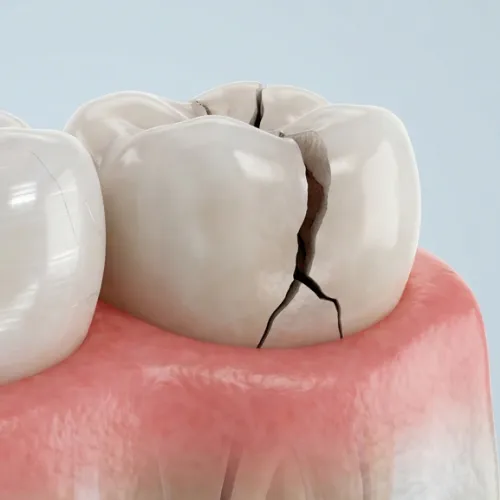
Each replacement cycle isn't a simple swap. Removing a bonded veneer requires grinding away the old restoration along with any remaining cement — and that process removes additional tooth structure every single time. Over multiple cycles, the cumulative reduction can be substantial.
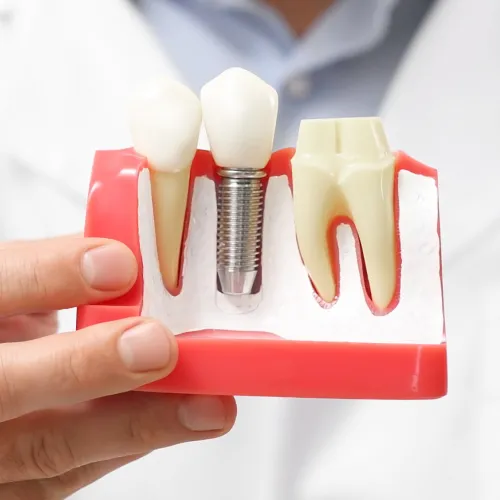
The clinical progression often follows a predictable path. A patient starts with a conservative veneer prep. By the second or third replacement, there's insufficient enamel remaining for reliable bonding, and the tooth must be restored with a full-coverage crown instead. Crown preparation removes even more tooth structure — approximately 2mm all the way around. Repeated crown work, combined with the cumulative thermal and mechanical stress on the pulp, significantly raises the likelihood of eventual root canal therapy — and understanding the cost of root canal treatment is something patients in this position should be prepared for. And if the root is compromised over decades, an implant may ultimately be the only remaining option.
This isn't a scare tactic. It's an honest description of what irreversible tooth preparation commits a patient to over a lifetime. The ADA has emphasized that procedures altering tooth structure should only be performed by licensed, trained dentists — in part because understanding this long-term trajectory requires professional judgment, not just technical skill.
Patients who are young, have otherwise healthy teeth, or have mild cosmetic concerns may be better served by reversible options — composite bonding, no-prep veneers, or whitening — that preserve more tooth structure for the decades ahead.
The Biomechanical Problem: What Porcelain Does to Your Other Teeth
Veneers are frequently placed on the upper front teeth only. Aesthetically, that makes sense — those are the teeth most visible when you smile. Biomechanically, it creates a mismatch that dentists take seriously.
Feldspathic porcelain and lithium disilicate — the two most common veneer ceramics — are measurably harder than natural tooth enamel. When a veneered upper tooth glides against a natural lower tooth during chewing or grinding, the porcelain acts as an abrasive surface. Over time, this accelerates wear on the opposing natural enamel in ways that wouldn't occur if both surfaces were natural tooth structure.
A WebMD overview of veneers notes that patients who grind or clench their teeth are generally poor candidates for veneers — and this is precisely why. Bruxism combined with hard porcelain creates a destructive cycle that damages both the veneer and the opposing arch.
For patients who do proceed with upper-arch veneers, a custom nightguard isn't optional maintenance — it's a clinical necessity. Without it, the lower teeth can experience accelerated wear within just a few years.
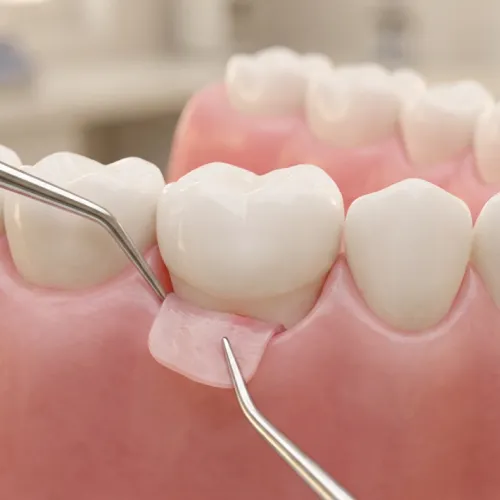
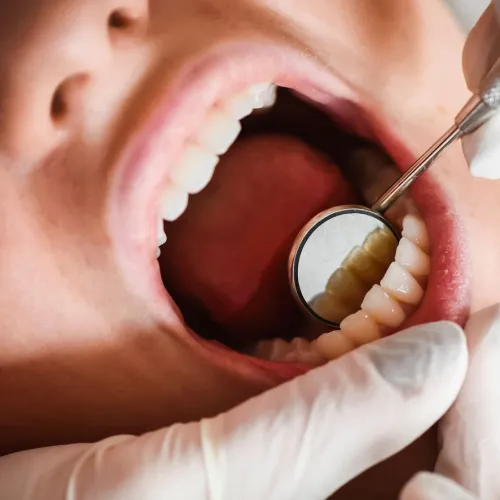
MouthHealthy.org from the ADA reinforces that veneer candidacy requires a full evaluation of bite, gum health, and tooth structure — not just the cosmetic goal. A dentist who skips that assessment isn't being thorough; they're skipping the part of the consultation that protects the patient. Gum health in particular is a critical factor — patients should be aware of what causes bleeding gums and learn what causes bleeding gums before pursuing any cosmetic procedure.
The Real Pros and Cons — Balanced and Honest
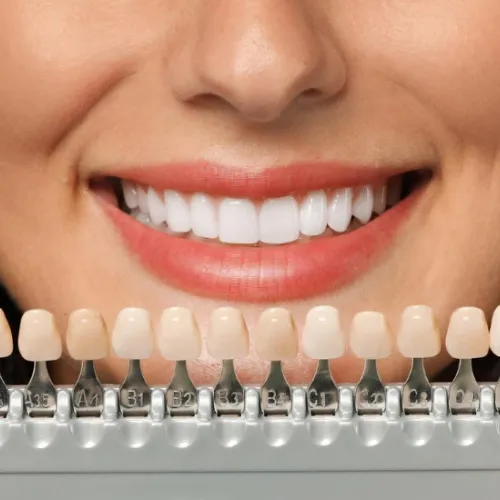
Veneers have genuine advantages. Porcelain resists staining better than natural enamel. A well-placed veneer can correct discoloration that bleaching won't touch — including tetracycline staining or fluorosis. Veneers can also close gaps, lengthen worn teeth, and create a symmetrical smile in a way that orthodontics alone can't always achieve. Patients curious about the broader possibilities may want to discover how to look younger with cosmetic dentistry to see how veneers fit into a comprehensive aesthetic treatment plan.
The cons deserve equal weight. Tooth preparation is irreversible. Candidacy depends on having sufficient healthy enamel, a stable bite, and healthy gum tissue. Patients with active periodontal disease, bruxism, or insufficient enamel are typically advised to address those issues first — or consider alternatives entirely.
Composite veneers offer a more conservative path for minor cosmetic corrections. No-prep options preserve more tooth structure. The right answer depends on the specific clinical picture, not on what looks appealing on social media.
Talk to a Specialist in Encino Before Making Any Decision
At Akemi Dental Specialists, we believe the consultation is where the most important work happens. Encino patients deserve a full picture — including the long-term implications — before committing to any irreversible dental procedure. Our periodontics and restorative teams work together to ensure your gum health and overall oral condition are fully evaluated before any cosmetic treatment begins. If you're considering veneers, let's evaluate your enamel, bite, and goals together first.
This article is for informational purposes only and does not constitute dental or medical advice. Individual treatment recommendations depend on a clinical evaluation by a licensed dental professional.