Restorative Dentistry, Implant Dentistry
Dental Implants and Complex Health Histories: What Actually Determines Your Candidacy
Your overall medical health matters more than your age when it comes to dental implants — but the real conversation is often about your medications, not just your diagnosis. Bone density and systemic inflammation also play a significant role, and understanding both can help you walk into a consultation as an informed candidate.
The Medication Question Nobody Asks (But Should)
Most patients research their diagnosis — "Can someone with lupus get implants?" — when the more important question is what medications they're taking to manage it.
This distinction matters enormously in implant planning. For Encino-area patients navigating complex health histories, understanding the full scope of dental implants as a treatment option is an essential first step. A patient with well-controlled rheumatoid arthritis managing symptoms with a mild NSAID is a completely different surgical candidate than someone on long-term high-dose corticosteroids or IV bisphosphonates. According to WebMD, your health is more of a factor than your age — and within that, medication status is central.
Here's why each drug class deserves its own conversation:
Corticosteroids (e.g., Prednisone): Long-term use impairs osteoblast function — the cells responsible for building new bone — while increasing osteoclast-mediated bone resorption. This directly undermines osseointegration. Patients on high-dose steroids may need to discuss dose timing with their rheumatologist before scheduling surgery.
TNF-α Inhibitors (e.g., Humira/adalimumab): These biologics alter cytokine-driven bone turnover. Research published in PMC on autoimmune implant outcomes confirms that DMARDs and biologics modulate the immune and inflammatory pathways essential for osseointegration, making their cumulative effects on healing a critical variable.
Antiresorptive Drugs (Bisphosphonates/Denosumab): These carry a specific risk — medication-related osteonecrosis of the jaw (MRONJ). Patients on intravenous bisphosphonate therapy face the highest exposure. Oral bisphosphonates carry lower risk but still require disclosure before any implant procedure.
The questions to bring to your rheumatologist before a consultation:
- Is my current drug regimen compatible with elective oral surgery?
- Can we time a dose reduction or "drug holiday" safely before the procedure?
- Is my condition currently in remission or active flare?
Getting written medical clearance — not just a verbal green light — is the standard of care for medically complex implant patients.
Preparing Your Body: The Pre-Surgical Optimization Window
Autoimmune patients aren't automatically disqualified from implants. But timing and preparation matter more for this group than for the general population. The concept is straightforward: systemic inflammation at the time of surgery increases failure risk. Reducing that inflammatory load before the first incision improves outcomes.
Three specific markers are worth monitoring in the months before surgery:
Vitamin D3 Levels: Vitamin D plays a direct role in calcium absorption and bone mineralization — both critical for implant osseointegration. Patients with deficient serum levels show worse marginal bone outcomes. Ask your physician to check 25-hydroxyvitamin D levels and supplement if needed before scheduling.
C-Reactive Protein (CRP): CRP is a standard blood marker for systemic inflammation. Elevated CRP signals an active inflammatory state — and scheduling implant surgery during a flare is associated with compromised healing. Waiting until CRP normalizes is a practical, measurable way to identify a safer surgical window.
The Quiescent Period Rule: Most implant specialists prefer to operate during a documented period of clinical remission. This isn't a vague preference — it's about giving osseointegration the biological conditions it needs. For patients with Sjögren's syndrome, lupus, or oral lichen planus, active mucosal disease at the implant site is a specific contraindication that must resolve before surgery.
A Healthline overview of implant candidacy notes that autoimmune disease and immunosuppressive medications are among the factors that affect whether implants are appropriate — reinforcing why pre-surgical optimization, not simple yes/no eligibility, is the right framework.
When Bone Density Is the Issue — Including When Grafting Isn't an Option
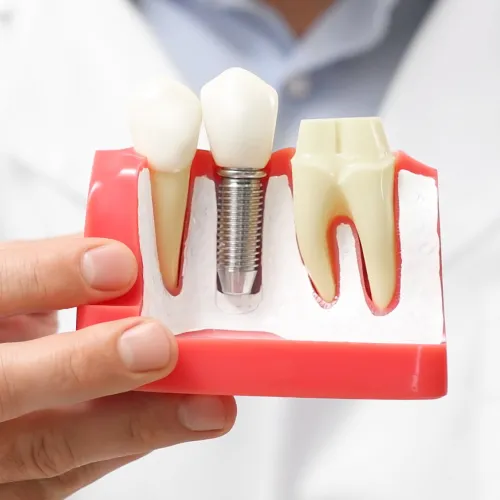
Adequate jawbone density and volume are foundational requirements for traditional implant placement. The bone must support the titanium post mechanically while osseointegration develops. Patients who have experienced significant bone loss — from prolonged tooth loss, periodontal disease, or osteoporosis — may be told they don't qualify.
But "not a candidate for traditional implants" doesn't always mean "not a candidate for implants."
For patients with moderate bone loss, bone grafting remains the standard pathway. The graft material rebuilds volume over several months, creating a viable implant site. This is a well-established procedure with predictable outcomes for most patients.
For patients with severe maxillary atrophy — those who've been told their bone loss is too extensive even for grafts — two alternatives deserve serious consideration:
Zygomatic Implants: These longer implants bypass the deteriorated maxillary jawbone entirely, anchoring instead in the dense cortical bone of the zygomatic arch (cheekbone). This remote anchorage approach allows full-arch restoration in patients who would otherwise have no implant option. Immediate loading is often possible.
Pterygoid Implants: Similarly, pterygoid implants engage the pterygoid plates of the sphenoid bone in the posterior upper jaw — another region of dense cortical bone unaffected by typical maxillary resorption. These are often combined with zygomatic implants for comprehensive rehabilitation.
Both approaches require advanced surgical expertise and careful 3D imaging planning, but they exist precisely for patients who have been turned away elsewhere. The technology used in this planning process — including cone beam CT imaging — is central to achieving predictable outcomes in complex cases.
For older adults specifically, the research is encouraging. A retrospective study published on PubMed of 47 geriatric patients aged 79–99 found a 99% survival rate for maxillary implants and 100% for mandibular implants — demonstrating that age and even reduced bone quality don't automatically disqualify patients when medical stability is present.
Harvard Health similarly notes that implants can help prevent further bone loss by maintaining mechanical stimulation in the jaw — making early intervention, when bone is still present, the strategically sound choice. Learning habits and pro tips to maintain your dental implants after placement is equally important for long-term success.
Who Is — and Isn't — a Strong Candidate
Good implant candidacy comes down to a cluster of factors evaluated together, not any single variable.
Strong candidates generally have:
- Stable, controlled systemic health (including managed chronic conditions)
- Sufficient bone volume or willingness to pursue grafting
- Non-smoking status or commitment to cessation
- Good baseline oral hygiene
- Realistic expectations about the multi-stage timeline
Factors that require additional planning (not automatic disqualification):
- Autoimmune disease in remission with appropriate medical clearance
- Controlled type 2 diabetes (well-managed glucose levels support osseointegration)
- Osteoporosis, depending on severity and medication regimen
- Prior bone loss, addressable through grafting or alternative implant approaches
Situations that may represent true contraindications:
- Active cancer treatment (chemotherapy or radiation to the jaw)
- Intravenous bisphosphonate therapy
- Uncontrolled diabetes
- Active, severe periodontal disease
- Heavy smoking without willingness to stop
The American Dental Association's patient resource Mouth Healthy notes clearly that your general health is more determinative than your age — and that medically stable patients across a wide range of conditions have achieved successful outcomes. Understanding the cost of root canal treatment and other restorative alternatives can also help patients make fully informed decisions about their care pathway.
Ready to Find Out Where You Stand?
If you've been told implants aren't possible — or if you're managing a complex health history and aren't sure where to start — Akemi Dental Specialists in Encino, California offers comprehensive implant consultations that account for your full medical picture. Our endodontics and implant specialists work together to evaluate your complete oral health before recommending a treatment path. A conversation with our team is the clearest way to know what's actually possible for you.
This article is for informational purposes only and does not constitute medical or dental advice. Individual candidacy for dental implants must be evaluated by a licensed dental professional through a comprehensive clinical examination.