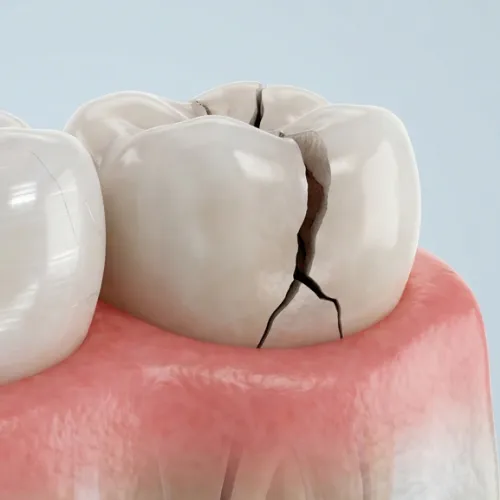
How Do Dentists Determine the Best Treatment for a Cracked Tooth?
Wondering how dentists determine the best cracked tooth treatment? Learn when minor cracks need care and when extraction is required. Schedule your visit today!
Read More

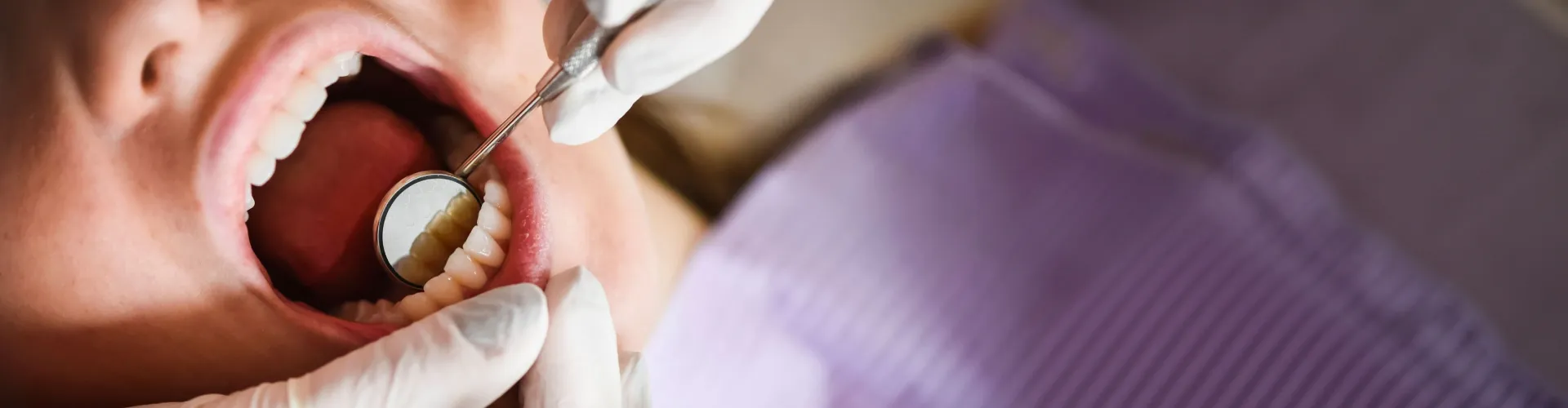
General Dentistry
Scaling and root planing (SRP) is a non-surgical deep cleaning procedure that removes bacterial buildup from below the gumline to treat periodontitis. Most patients complete treatment in two to four appointments. Recovery typically takes a few days, though the healing process brings some surprises worth knowing in advance.
One of the least-discussed aspects of SRP recovery is what happens visually as your gums heal. For Encino-area patients, understanding this visual shift helps manage expectations after treatment. When periodontitis is active, gums are swollen, boggy, and inflamed — which actually makes teeth look fuller and more "connected" at the base. As the infection clears and gum tissue firms up, that swelling subsides.
The result? Gums that appear to have receded, and small dark triangular gaps — called gingival embrasures or "black triangles" — that seem to appear between teeth. This can alarm patients who expected their smile to look better after treatment.
Here's the important reframe: those gaps are not a failure. They reveal the actual bone architecture that was always there, hidden beneath inflamed tissue. Healthy, firm gums simply don't fill that space the way swollen tissue did.
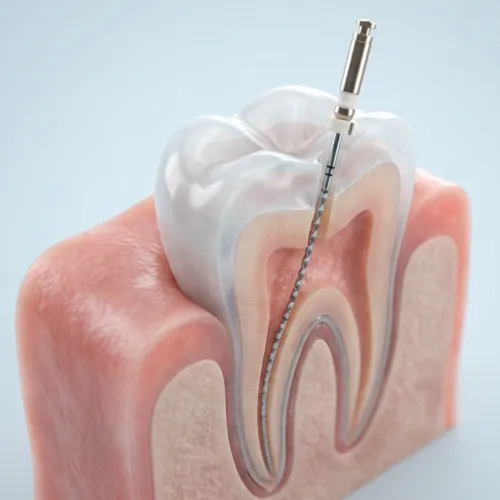
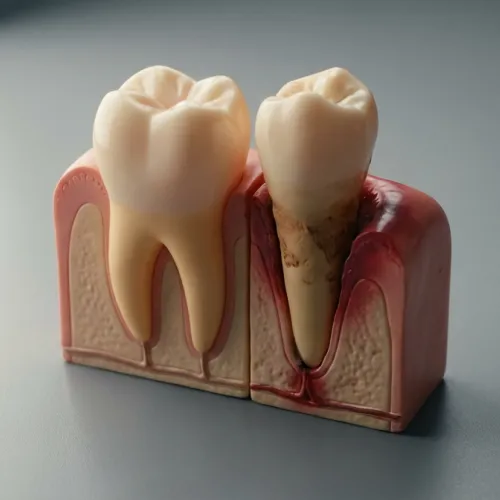
Cleaning these new spaces requires a different approach. Standard floss can miss the wider triangular gaps that form after healing. Interdental brushes (small cone-shaped brushes sized to fit each gap) are typically more effective. Your hygienist at Akemi Dental Specialists can help you identify the right size and technique for your specific anatomy. To understand more about what's happening beneath the surface, it helps to learn about the parts of a tooth and how the root and surrounding structures are affected by periodontal disease.
According to Healthline, deep cleaning removes buildup from the gap between teeth and gums — which is precisely why the tissue changes shape as healing progresses.
As the American Dental Association's MouthHealthy resource explains, SRP is a two-part deep cleaning procedure used when pockets between teeth and gums become too deep for standard cleaning to address.
Scaling is the first phase. Your clinician removes plaque, calculus, and bacterial deposits from tooth surfaces — both above and below the gumline, down into the periodontal pocket. This can be done with handheld instruments, ultrasonic devices, or a combination of both.
Root planing follows. The root surfaces are smoothed to eliminate rough areas where bacteria and toxins have embedded into the cementum. Smoother roots make it harder for plaque to reattach and give gum tissue a cleaner surface to reattach against.
Local anesthetic is applied before either phase begins, so the procedure itself should not be painful. You may feel pressure and vibration, but discomfort during the appointment is typically minimal.
Why is the mouth treated in sections? Most dentists treat one side — or one quadrant — per visit rather than numbing the entire mouth at once. This is a deliberate clinical decision. Numbing both sides of the mouth simultaneously impairs your ability to swallow comfortably and speak clearly. More importantly, it increases the risk of accidentally biting your cheek, tongue, or lips without realizing it. Treating one side at a time lets you chew normally on the untreated side while the other side recovers from anesthesia.
Our periodontics team uses this approach to ensure patient comfort and safety throughout every stage of treatment.
Research published in PMC confirms that SRP is the cornerstone of periodontal therapy, targeting the bacterial biofilm and calculus that drive tissue destruction.
A single SRP session typically runs 45 to 90 minutes depending on the severity of disease and the number of teeth being treated. For moderate to severe periodontitis, most patients need two to four appointments to complete the full mouth — spaced roughly one to two weeks apart.
After the final session, a follow-up evaluation is scheduled (usually four to eight weeks later) to measure pocket depths and assess how the tissue has responded. This appointment determines next steps.
This is also where an important long-term shift occurs that most patients aren't told about in advance. Once SRP has been performed, patients are typically reclassified from "preventive" cleanings to periodontal maintenance — often coded as D4910 in dental billing. As the ADA notes in its coding guidance, coverage parameters for periodontal procedures vary significantly by plan.
The practical difference: instead of returning every six months, most patients on periodontal maintenance return every three months. This isn't arbitrary — a systematic review on periodontal maintenance intervals in PMC found that shorter recall intervals (three to six months) favor greater tooth retention over time. The more frequent schedule reflects a permanent shift in how your periodontal health is monitored, not just a short-term follow-up.
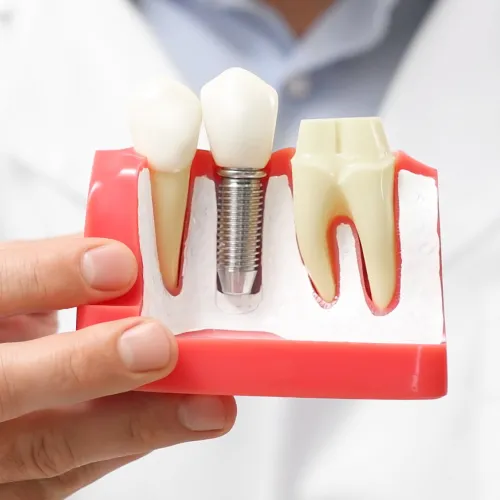
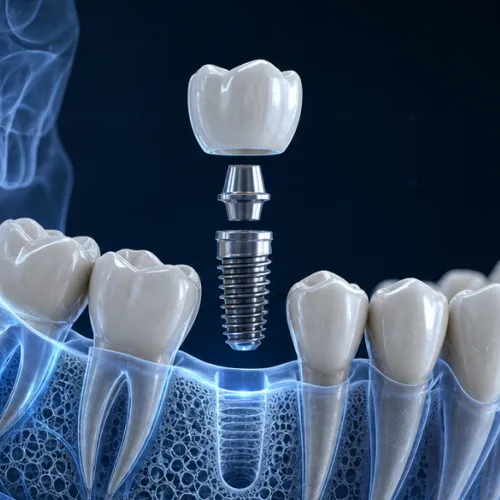
If left untreated, advanced gum disease can eventually lead to tooth loss — at which point dental implants may become necessary to restore function and appearance.
Most patients experience soreness in the gums for two to three days after each session. Tooth sensitivity — particularly to temperature — can persist for up to a week. Gums may appear slightly swollen or bleed more easily during brushing immediately after treatment.
WebMD's overview of periodontal scaling and root planing notes that sensitivity typically resolves within a week, and that dentists may recommend a mouth rinse or antibiotics to support healing in some cases.
Practical recovery tips:
Pain after SRP tends to peak between two and eight hours following the procedure and typically returns to pre-treatment levels by the following morning for most patients.
If you've been told you need scaling and root planing — or if it's been a while since a thorough periodontal evaluation — Akemi Dental Specialists is here to help. Serving patients throughout Encino and the San Fernando Valley, our team provides thorough periodontal care with clear guidance at every stage of treatment. Reach out to schedule your evaluation.
This article is for informational purposes only and does not constitute dental or medical advice. Please consult a licensed dental professional for diagnosis and treatment recommendations specific to your situation.


Dental Specialists Encino, CA
Here's what our patients are saying about us...




Mon, Fri 6:30 am - 4 pm
Tue, Thu 6:30 am - 5 pm
Wed 6:30 am - 3 pm
Sat, Sun Closed
16055 Ventura Blvd. Suite #820, Encino, CA 91436
Endodontic Care Encino, CA