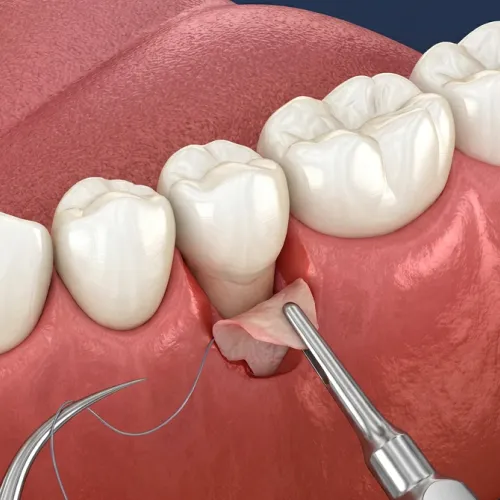
Gum Graft Disadvantages, Risks, and Pain: What Patients in Encino Should Know
Wondering about gum graft risks, pain, and drawbacks? Learn what Encino patients must know before surgery. Schedule your expert consultation with us today!
Read More

General Dentistry
Once gum pockets deepen past 4mm, home care physically cannot reach the bacteria driving your disease — and scaling and root planing is the only way to clean that space. Understanding what the procedure actually does, and what it won't do, helps you make better decisions about your periodontal health.
I hear this concern often: "Can't I just brush better and avoid the deep cleaning?" It's a fair question, and the honest answer comes down to simple geometry.
Toothbrush bristles and dental floss can physically reach approximately 2 to 3 millimeters below the gumline. That's it. Once a pocket measures 4mm or deeper, you've crossed into a zone that is mathematically impossible to clean at home — no matter how diligent you are.
According to Mayo Clinic, pockets deeper than 5mm cannot be cleaned adequately even with routine professional care, let alone a toothbrush. What happens inside these deep pockets is worth understanding. Bacteria thrive in the low-oxygen environment below the gumline, multiplying without interruption. The immune system responds with chronic inflammation, and that inflammation begins destroying the bone supporting your teeth.
For Encino-area patients, this is how gum disease progresses silently. Most people feel no pain during early and moderate periodontitis. By the time you notice loose teeth or visible gum recession, significant bone loss has often already occurred. If you want to understand more about what's happening beneath the surface, learn what causes bleeding gums in Encino CA to recognize the early warning signs.
The 4mm threshold isn't arbitrary. The ADA's MouthHealthy resource on scaling and root planing confirms that when pockets exceed this depth, professional deep cleaning becomes necessary because a routine prophylaxis simply doesn't reach the source of infection. Brushing more aggressively at this point doesn't help — it only addresses the surface while the true problem sits deeper, untouched.
Scaling and root planing is a two-part procedure. Scaling removes plaque, tartar, and bacterial toxins from tooth surfaces both above and below the gumline. Root planing smooths the root surface itself, which discourages bacteria and calculus from re-adhering quickly.
The American Academy of Periodontology describes this as removing plaque and bacterial toxins from within periodontal pockets, followed by smoothing the root to prevent future buildup from sticking. I use both hand instruments and ultrasonic scalers depending on pocket depth and patient comfort. Local anesthesia is standard — you shouldn't feel pain during the procedure.
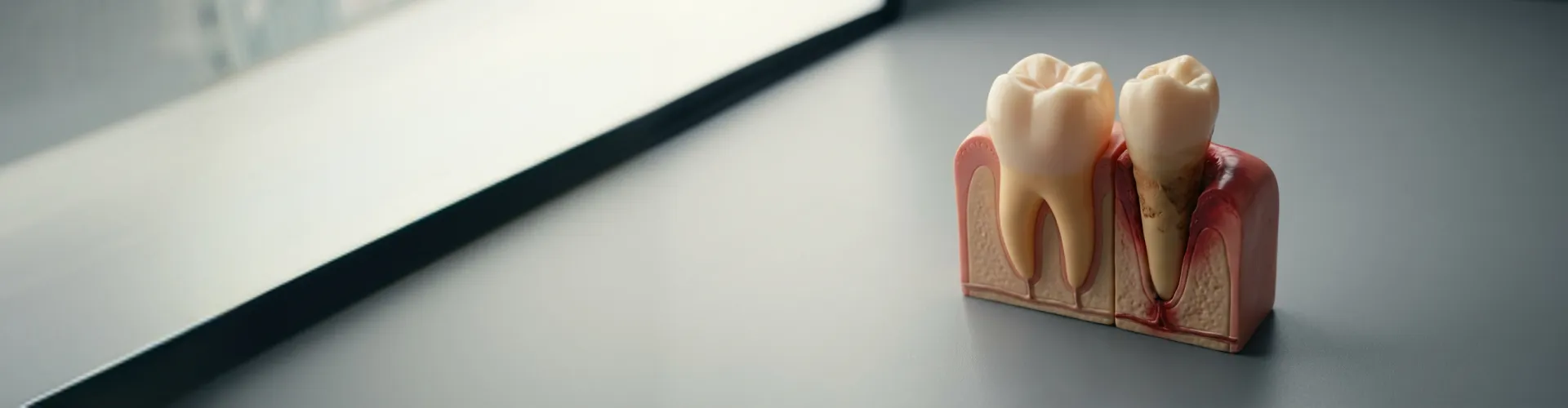
To better understand the anatomy involved, it helps to learn about the parts of a tooth in Encino CA and how the root surface relates to the surrounding gum tissue.
There's something important I want to address directly: what happens to teeth that feel slightly mobile before treatment. In cases of heavy tartar accumulation, calculus can actually bridge across multiple teeth, creating a false sense of stability. Patients sometimes describe their teeth as feeling "solid" before treatment. What they're feeling isn't healthy bone support — it's calculus acting as a splint.
When that calculus is removed during scaling, those teeth may feel temporarily looser. This is not damage. The calculus was artificially holding them together, and now that it's gone, the true periodontal condition becomes apparent. The gums need time to respond to the cleaner root surface before any tightening can occur. I prepare every patient for this possibility because the alternative — leaving that calculus in place — allows the bone destruction to continue unchecked beneath the surface.
Here's where clinical honesty matters most. After scaling and root planing, many patients expect their gums to look the way they did before gum disease started — firm, pink, hugging the teeth tightly. The reality is more nuanced.
Healing after deep cleaning often produces what we call a long junctional epithelium. This means the gum tissue attaches to the cleaned root surface like a seal rather than regenerating the full connective tissue and bone attachment that existed originally. The gum line may actually sit lower after treatment than before. Teeth can look longer. Small triangular spaces may appear between teeth where inflamed tissue once filled the gap.
This isn't failure. It's what healthy actually looks like after advanced disease. The inflamed, swollen tissue that made gums look full was a sign of active infection — not health. Cleveland Clinic notes that scaling and root planing can reduce pocket depth, improve gum health, and give patients the best chance at long-term oral health, but the goal is stabilization — not cosmetic restoration of the original gumline.
Does the procedure stop gum disease? In many cases, yes — when followed by proper home care and regular periodontal maintenance visits. Research published via Healthline confirms that deep cleaning can stop disease advancement, treat active infection, and protect the roots of your teeth. But scaling and root planing is not a one-time cure. Periodontal disease is chronic. Without consistent maintenance appointments and diligent home hygiene, bacterial populations recolonize those pockets within weeks.
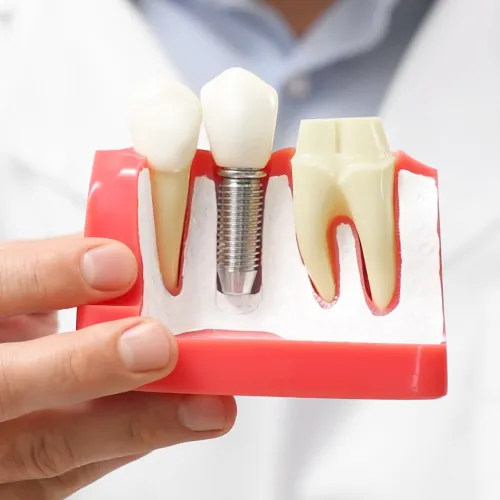
In cases where bone loss has progressed significantly, dental implants may eventually become part of the conversation if teeth cannot be saved — making early intervention all the more important.
There's also a meaningful systemic dimension. Harvard Health reports that treating gum disease is associated with lower healthcare costs and fewer hospitalizations in people with cardiovascular disease — a finding that underscores how far the effects of periodontal inflammation extend beyond the mouth.
If you've been told you have deep pockets, or if your gums bleed regularly when you brush, please don't wait. The window where scaling and root planing can stabilize your condition without surgical intervention is real — but it doesn't stay open indefinitely.
At Akemi Dental Specialists in Encino, Dr. Matthew Okui evaluates each patient's pocket depths, bone levels, and risk factors before recommending any treatment. My goal is to give you a clear picture of what's happening in your mouth — and what your realistic outcomes are — so you can make an informed decision about your care.
Medical disclaimer: This article is for informational purposes only and does not constitute medical or dental advice. Always consult a licensed dental professional for diagnosis and treatment recommendations specific to your condition.


Dental Specialists Encino, CA
Here's what our patients are saying about us...




Mon, Fri 6:30 am - 4 pm
Tue, Thu 6:30 am - 5 pm
Wed 6:30 am - 3 pm
Sat, Sun Closed
16055 Ventura Blvd. Suite #820, Encino, CA 91436
Endodontic Care Encino, CA