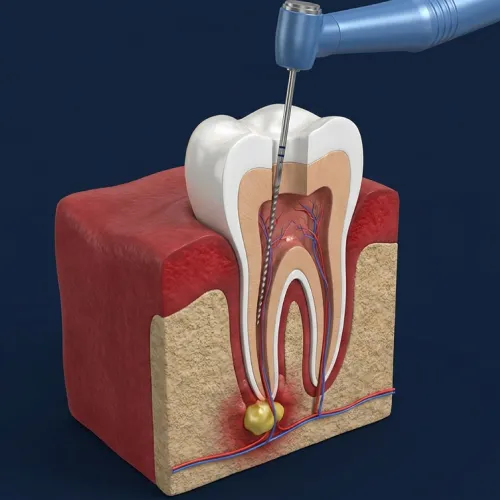
Is Root Canal Retreatment Worth It to Save Your Natural Tooth?
Wondering if root canal retreatment can save your tooth? Learn about success rates, lifespan, and benefits. Contact Akemi Dental Specialists today!
Read More


Emergency Dentistry
Root canal retreatment succeeds in roughly 78–87% of cases when performed with modern technology, and most retreated teeth can last a lifetime with proper care. Whether retreatment is the right path depends heavily on why the first procedure failed — and whether enough tooth structure remains to hold a permanent restoration.
Most patients searching this topic find a blanket number — "75–85% success" — and leave more anxious than before. That number obscures a critical truth: retreatment success varies significantly depending on the clinical mechanism behind the original failure.
When a first root canal fails because of missed anatomy — an untreated canal like the notoriously elusive MB2 in upper first molars, or an underfilled canal that left bacteria behind — retreatment outcomes under a specialist microscope are excellent, often exceeding 85–90%. The problem was mechanical and correctable. A modern endodontist using 3D CBCT imaging can locate the missed canal, clean it thoroughly, and seal it properly.
Contrast that with cases involving persistent bacterial strains, a large pre-existing periapical lesion, or long-standing coronal leakage. According to the American Association of Endodontists, teeth with complicated anatomy that went undetected or restorations that failed to prevent salivary contamination are among the most common drivers of retreatment need — and each carries a different prognosis.
A 2024 systematic review restricted to modern-era techniques reported periapical healing rates of 78.8–87.5% depending on how strictly healing was defined. Critically, that same analysis found that teeth with no visible lesion before retreatment healed better than those with one, and small lesions outperformed large ones. The practical implication: acting earlier, before infection has time to expand, meaningfully improves your odds.
Knowing the root cause of failure also helps distinguish biological failure — residual bacteria — from a structural problem that no amount of retreatment can fix.
Patients often assume retreatment is simply a biological question: can the infection be cleared? In reality, many retreated teeth eventually fail mechanically rather than biologically, and this distinction shapes the entire treatment conversation.
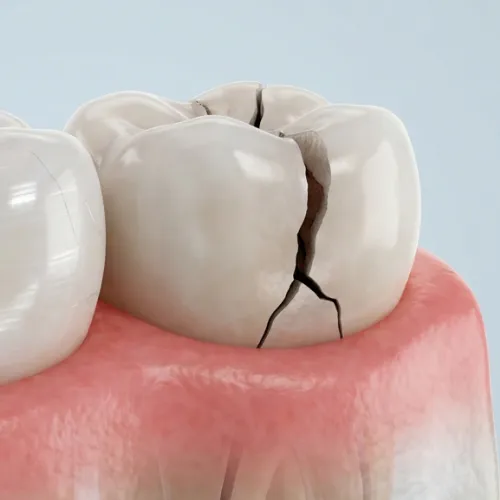
The key concept is the ferrule effect — the requirement for at least 1.5 to 2mm of sound, vertical tooth structure above the gumline to allow a crown to grip the tooth predictably. When a tooth has been through deep decay, multiple restorations, and an initial root canal access preparation, dentin walls can be dangerously thin. Repeated access cavity drilling thins them further. A tooth that clears infection beautifully may still fracture vertically within a few years if insufficient structure remains, and a vertical root fracture is one of the few failure modes that leads directly to extraction.
Before recommending retreatment, an endodontist will evaluate remaining dentin thickness, crown-to-root ratio, and periodontal bone support alongside the endodontic picture. As Cleveland Clinic notes, when damage is too severe for a standard approach, surgical alternatives or extraction become the more realistic conversation.
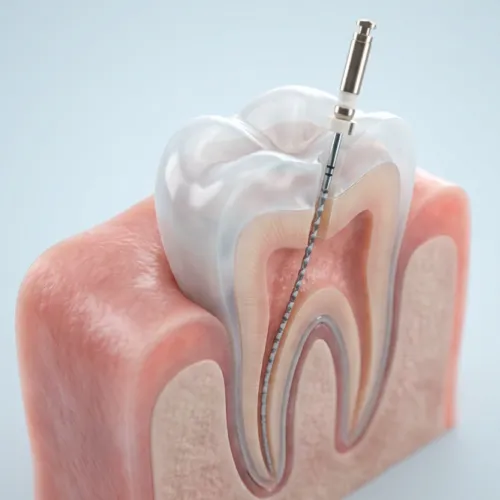
The structural checklist matters because it reframes the question. Retreatment isn't just "can we clean the canals again?" It's "will this tooth hold a functional crown for the long term?" Both answers need to be yes. Understanding the parts of a tooth — including dentin, pulp, and root structure — can help patients better grasp why these structural considerations are so critical.
There is a third scenario that competing resources rarely address: teeth with a cemented post inside the root. Custom cast posts and fiber posts are common in teeth that have already had root canal treatment, and removing them to re-access the canals carries a real risk of root perforation or vertical root fracture — potentially converting a saveable tooth into an immediate extraction.
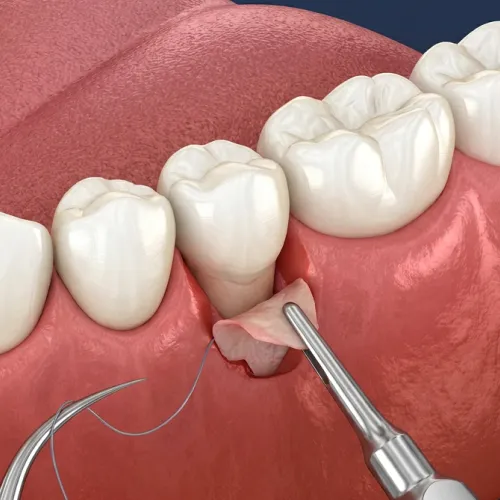
For these cases, retrograde endodontic surgery (apicoectomy or root-end surgery) often offers a higher tooth-survival rate than attempting orthograde retreatment through the crown. Rather than removing the post and re-entering the canal from above, the surgeon makes a small incision in the gum, accesses the root tip directly, removes a few millimeters of the root end, and seals it from outside. The existing post and crown stay in place. Research published on PubMed confirms that microsurgical endodontic treatment — the modern version of this approach — achieves high survival rates and should be evaluated before extraction is considered.
This matters because the decision between nonsurgical retreatment and apicoectomy is not simply about preference. It is a risk-benefit calculation driven by what is physically inside the tooth. An endodontist who evaluates both routes — and explains why one is safer for your specific anatomy — is doing exactly what the diagnostic workup requires. Advanced dental technology such as 3D CBCT imaging and surgical microscopes plays a central role in making these determinations accurately.
With a successful retreatment and a well-placed permanent crown, a retreated tooth can remain functional for decades. The American Association of Endodontists notes that with proper care, most teeth that have undergone endodontic treatment can last a lifetime. Long-term survival data supports this: studies tracking root canal-treated teeth show a 97% retention rate at 10 years and approximately 68% at 37 years — a meaningful lifespan by any measure.
The crown timeline is not optional. Teeth restored with a crown within 60 days of retreatment show significantly better long-term outcomes than those where crown placement was delayed. A temporary filling left too long allows new bacterial contamination — the same coronal leakage that may have caused the original failure.
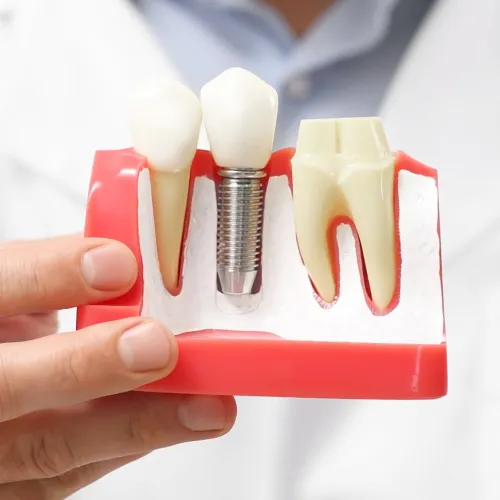
According to Healthline, extraction followed by dental implants is a valid alternative, but it requires additional procedures, healing time, and in some cases bone grafting — none of which preserves the original tooth. Nothing functions quite like a natural tooth, and retreatment remains the first-line option worth evaluating before moving to extraction.
If you've been told a previous root canal may be failing, the most important next step is a thorough diagnostic evaluation — not a rushed decision. Akemi Dental Specialists serves patients throughout the San Fernando Valley from our Encino location. Our team — including Dr. Matthew Okui — can assess the cause of failure, evaluate remaining tooth structure, and walk you through every option — retreatment, microsurgery, or otherwise — so you can make a confident, informed choice.
This article is for informational purposes only and does not constitute professional dental or medical advice. Please consult a licensed dental provider for diagnosis and treatment recommendations specific to your situation.

Dental Specialists Encino, CA
Here's what our patients are saying about us...





Mon, Fri 6:30 am - 4 pm
Tue, Thu 6:30 am - 5 pm
Wed 6:30 am - 3 pm
Sat, Sun Closed
16055 Ventura Blvd. Suite #820, Encino, CA 91436
Endodontic Care Encino, CA