Gum contouring, crown lengthening, dental bonding, and laser therapy aren't competing options you simply pick between — your bone anatomy, tooth proportions, and gum tissue type determine which approach is biologically safe and aesthetically effective. Choosing the wrong one doesn't just underdeliver; it can cause chronic inflammation or guaranteed relapse.
Why Bone Anatomy — Not Aesthetics — Decides Between Gum Contouring and Crown Lengthening
For Encino-area patients, most assume gum contouring and crown lengthening are simply "mild" versus "aggressive" versions of the same thing. That assumption leads to real clinical problems.
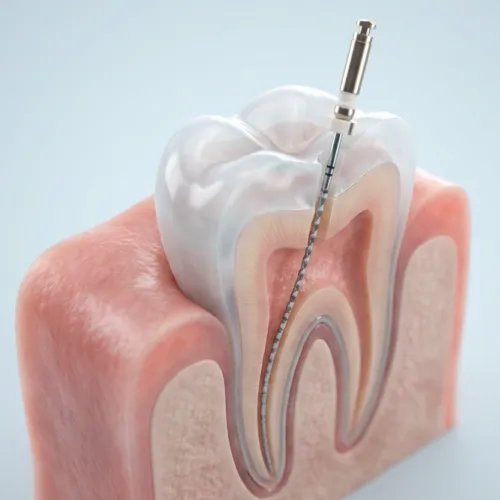
The deciding factor is biological width — a roughly 3mm zone of attachment between the base of the gum sulcus and the alveolar bone crest. When a periodontist removes gum tissue without accounting for how close the bone sits to the gum margin, that 3mm zone gets violated. The result: chronic inflammation, persistent bleeding, and gum tissue that simply grows back to re-establish its protective buffer.
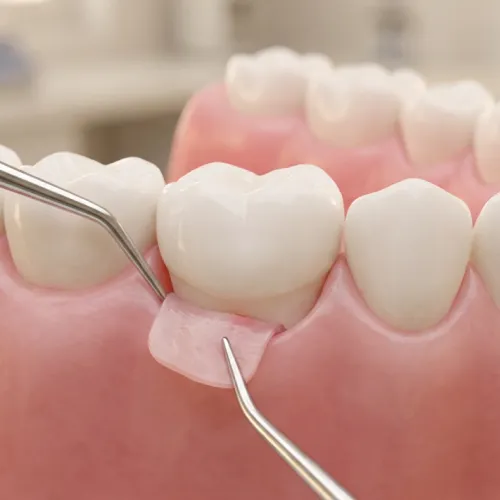
This is why bone sounding — a probing technique that measures from the gum margin down to the bone crest — happens before any soft-tissue contouring procedure. If the bone crest is positioned too close to where the new gum line needs to sit, soft-tissue-only contouring will fail. The biology overrules the aesthetic plan every time.
Crown lengthening solves this by recontouring both the gum tissue and the underlying bone, repositioning the bone crest to a depth that preserves biological width while exposing more tooth structure. According to Healthline, crown lengthening reduces gum tissue and shaves down bone when necessary so more of the tooth is above the gum's surface — and a properly fitted outcome allows for better oral hygiene and long-term comfort.
The American Academy of Periodontology describes crown lengthening as the appropriate treatment when excess gum tissue covers too much of the tooth crown — distinguishing it clearly from simple contouring cases.
The practical takeaway: If your periodontist identifies that your bone crest is within 3mm of your intended new gum line, crown lengthening isn't optional — it's biologically required for a stable, lasting result. Gum contouring alone is appropriate only when adequate space exists between the planned gum margin and the underlying bone.
The 75–80% Proportion Rule: When Gum Contouring Beats Bonding (and When You Need Both)
People searching "gum contouring vs. dental bonding" are usually trying to fix teeth that look small or boxy. The problem is that generic advice rarely explains why the teeth look that way — and the answer changes everything.
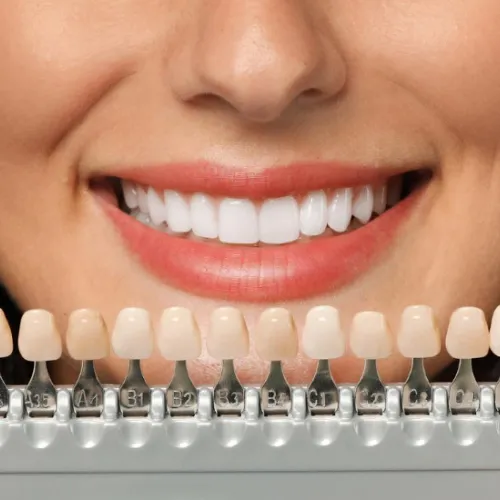
Ideal tooth aesthetics follow a width-to-length ratio of roughly 75–80%. A central incisor that looks squat or "chiclet-shaped" could be that way for two entirely different reasons:
- Excess gum tissue is covering a normal-length crown (subtractive problem → gum contouring)
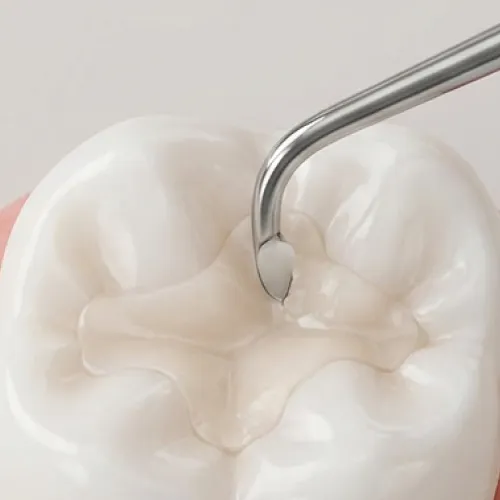
- Microdontia or incisal wear has shortened the tooth itself (additive problem → dental bonding)
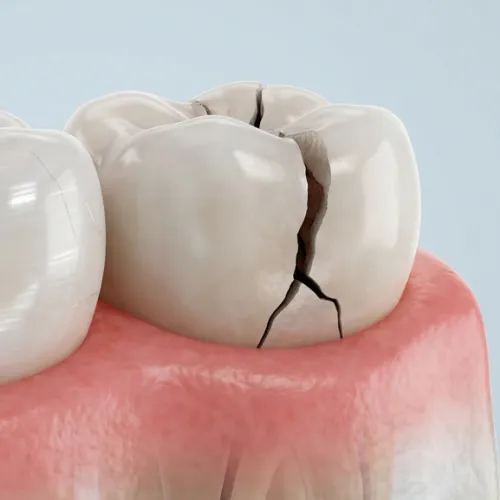
Applying bonding to a tooth still buried under excess gum tissue doesn't fix proportions — it creates a wider, bulkier tooth that looks even more unnatural. Conversely, contouring a tooth that's already the correct length leaves you with exposed structure but no added dimension.
When both issues are present, sequencing matters critically. Contouring must come first. After removing gum tissue, you must allow a 6–8 week healing period before placing composite bonding. Placing bonding immediately after contouring risks compromised margins — the composite edge sits on inflamed, unstable tissue that's still reshaping.
Cleveland Clinic explains that before any gum contouring procedure, providers assess the gum-to-tooth ratio, lip position, tooth wear, and facial bone structure together — confirming that proportion analysis is built into the diagnostic process, not an afterthought.
WebMD notes that gum contouring alone is considered cosmetic in most cases, but it becomes part of necessary periodontal treatment when tissue overgrowth has compromised the crown's functional surface. Patients interested in improving their smile's overall appearance may also want to explore cosmetic dentistry options that complement gum contouring results.
Laser Therapy Isn't a Separate Procedure — Your Gum Biotype Determines Whether It's Even Safe
Search results often frame laser therapy as a standalone competitor to gum contouring, implying it's simply the modern, superior version. That framing is misleading and, in some cases, clinically risky.
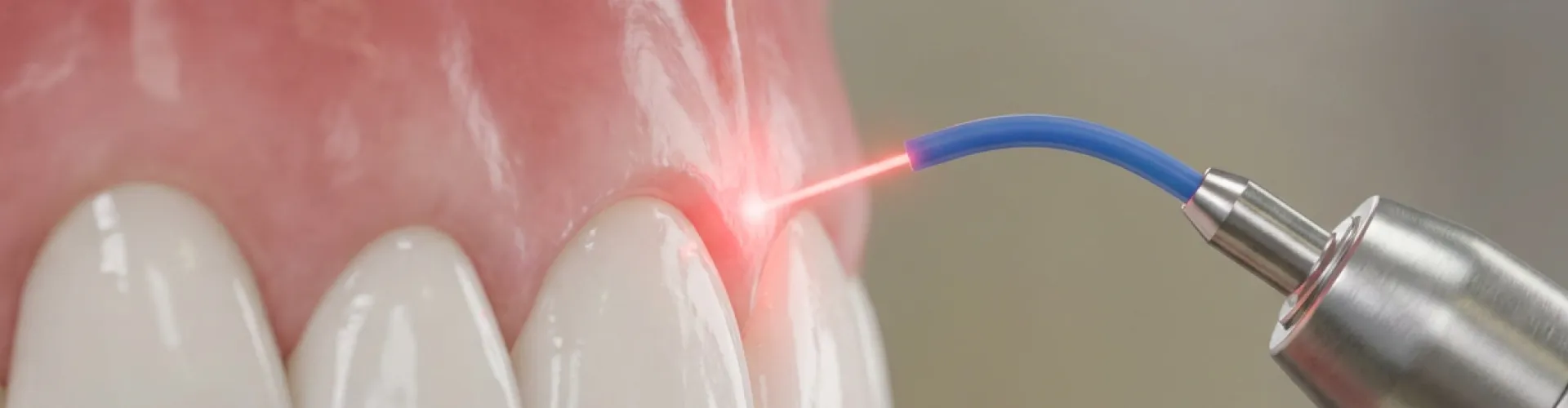
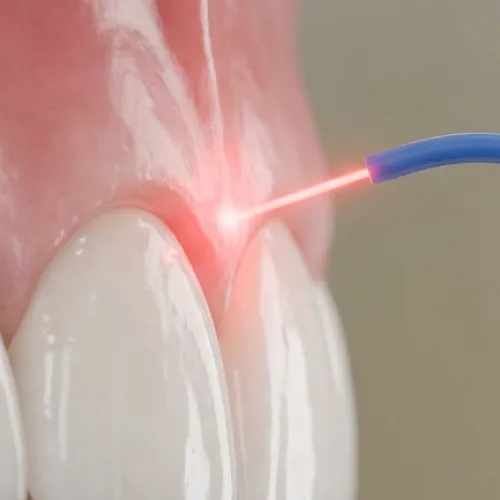
A laser is an instrument — not a distinct procedure category. The real clinical question isn't "laser or no laser?" It's whether your gingival biotype makes laser energy the appropriate tool for your specific tissue.
Gingival biotype falls into two categories:
- Thick biotype: Dense, fibrous tissue that absorbs laser energy predictably and heals with minimal recession risk. Diode lasers perform well here.
- Thin biotype: Delicate, translucent tissue highly vulnerable to lateral thermal spread. Laser energy can cause unpredictable recession and erratic aesthetic margins that are difficult to correct.
For thin biotypes, cold scalpel or microsurgical contouring remains the gold standard. The precision of a blade allows controlled tissue removal without thermal damage to adjacent structures. Patients with thin gingival tissue who undergo laser contouring are at measurable risk of ending up with an uneven result — or recession that requires a graft to correct. Understanding the technology available at your dental practice can help you ask the right questions about which instruments are being used and why.
Healthline's overview of laser gum surgery acknowledges that while the FDA has approved laser use for several periodontal applications, evidence remains limited and proper periodontist training in laser protocols is essential for safe outcomes.
Cleveland Clinic's gingivectomy overview confirms that surgeons currently use scalpels, lasers, and radiosurgery — framing these as technique options within the same procedure, not competing treatments.
A qualified periodontist assesses biotype at the initial consultation and selects the instrument accordingly — not the other way around. If you've experienced issues like persistent gum irritation or bleeding, it may also be worth reading about what causes bleeding gums before your consultation.
Ready to Find Out Which Approach Is Right for You?
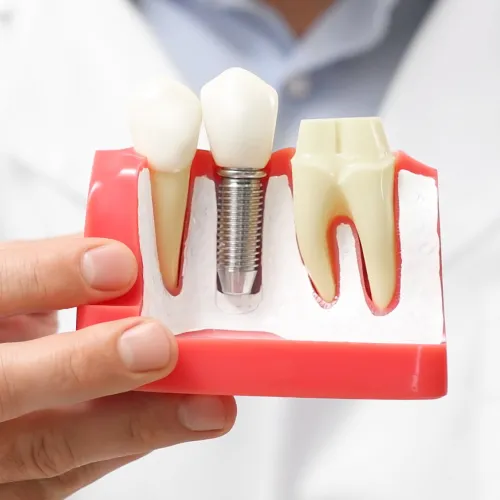
At Akemi Dental Specialists, our periodontists serving Encino and the greater San Fernando Valley evaluate bone depth, gum biotype, and tooth proportions before recommending any cosmetic or restorative gum procedure. Whether you're also considering dental implants or other restorative solutions, the right answer depends on your anatomy — and we'll show you exactly why. Contact us to schedule a consultation.
This article is for informational purposes only and does not constitute medical or dental advice. Always consult a licensed dental professional for diagnosis and personalized treatment recommendations.