What Cracked Tooth Treatment Can Do for Your Smile
Can cracked tooth treatment save your smile? Learn how prompt care prevents tooth loss and restores your teeth. Contact Akemi Dental Specialists today!
Read More

Emergency Dentistry
A cracked tooth isn't just a cosmetic issue — left untreated, it can lead to infection, spreading damage, and eventual tooth loss. Understanding your treatment options and acting quickly gives you the best chance of saving the tooth and protecting your long-term oral health.
Most people assume a cracked tooth is a minor inconvenience. The reality is more serious. According to Healthline, cracked teeth are the leading cause of tooth loss in industrialized nations — a fact that surprises most patients.
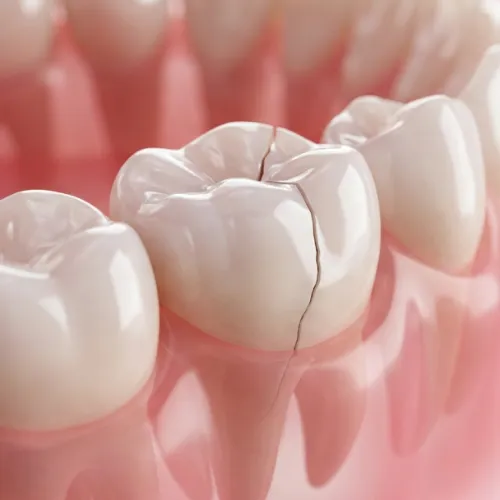
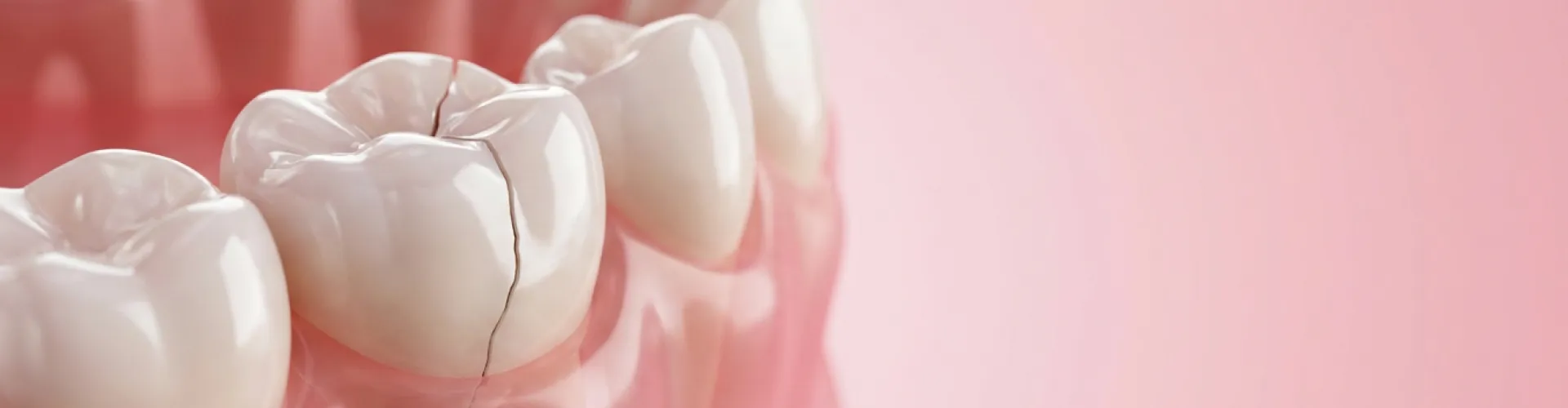
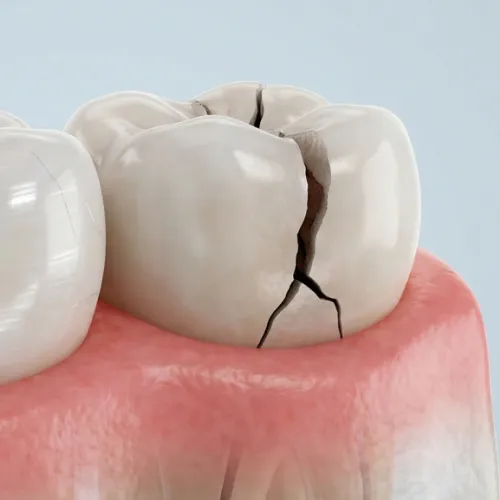
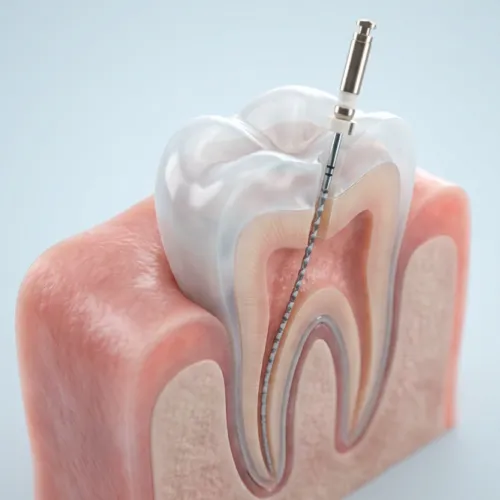
Cracks vary widely in severity. Some, called craze lines, are tiny surface fractures that cause no pain and need no treatment. Others — like vertical root fractures or split teeth — can reach below the gum line and threaten the entire tooth structure. The type of crack determines both the urgency and the treatment approach. To better understand the anatomy involved, it helps to learn about the parts of a tooth and how each layer can be affected by a fracture.
What makes early intervention so valuable is the window it creates. A crack that hasn't yet reached the gum line is generally savable. Once it extends past that point, extraction often becomes the only option. Prompt treatment doesn't just address today's pain — it protects against a much more serious outcome down the road.
For Encino-area patients, common symptoms worth paying attention to include pain when biting down (especially when releasing the bite), sensitivity to temperature, and intermittent discomfort that doesn't follow a predictable pattern. Because X-rays don't always reveal cracks clearly, a thorough clinical exam — including visual inspection, dental dye, and probing — is often necessary to identify the full extent of the damage.
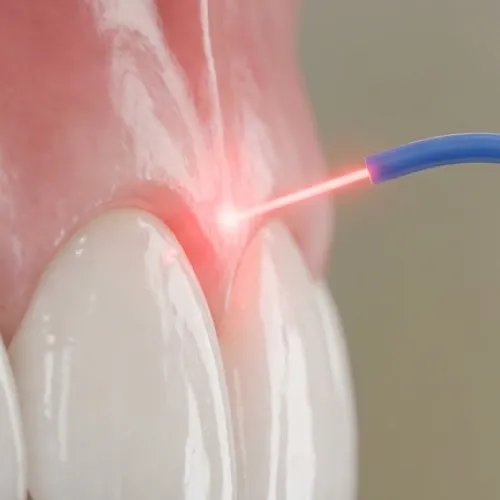
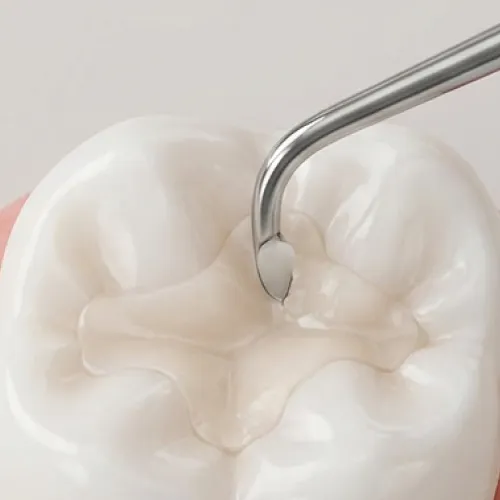
The degree of damage guides every treatment decision. For smaller chips or minor fractures, dental bonding is often all that's needed. As WebMD explains, bonding uses a tooth-colored composite resin applied and shaped directly on the tooth, then hardened with ultraviolet light — typically in a single visit with no anesthesia required.
When damage is more extensive, a dental crown becomes the more appropriate solution. Crowns cover and protect the remaining tooth structure, preventing the crack from spreading further and restoring full biting function. Different crown materials — metal, porcelain-fused-to-metal, all-ceramic — each offer distinct advantages depending on the tooth's location and the extent of the fracture.
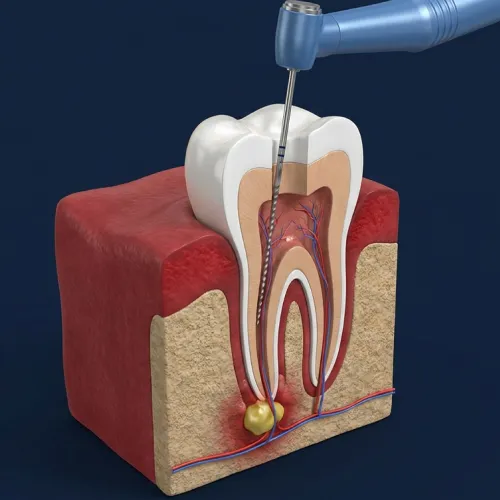
For cracks that have reached the tooth's inner pulp — the soft tissue containing nerves and blood vessels — endodontics treatment may be necessary before placing a crown. This isn't a sign that the tooth is unsavable. It's often the step that makes saving it possible. Understanding root canal treatment can also help patients plan ahead when this step becomes necessary.
In cases involving a split tooth, partial preservation may still be achievable. Even when the entire tooth can't be saved, a dentist may be able to retain a portion of the root and restore function through other means. The key variable in all of these scenarios is timing: the earlier treatment begins, the more options remain on the table.
Treating a cracked tooth isn't just about fixing the immediate problem. It's about interrupting a chain of events that, if left alone, tends to escalate.
An untreated crack creates an entry point for bacteria. Over time, those bacteria can cause decay deep within the tooth. The National Institute of Dental and Craniofacial Research notes that once bacterial acids begin breaking down enamel, the damage is permanent without professional intervention — meaning the tooth won't recover on its own.
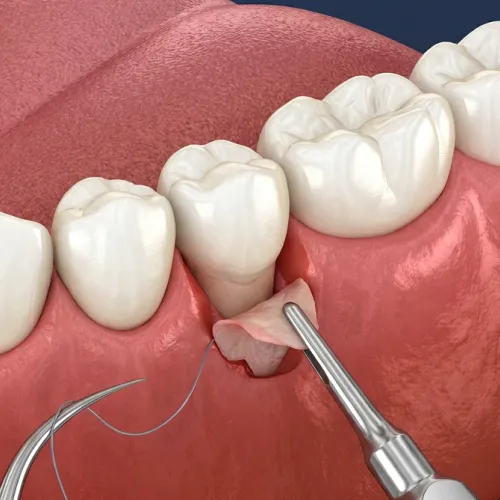
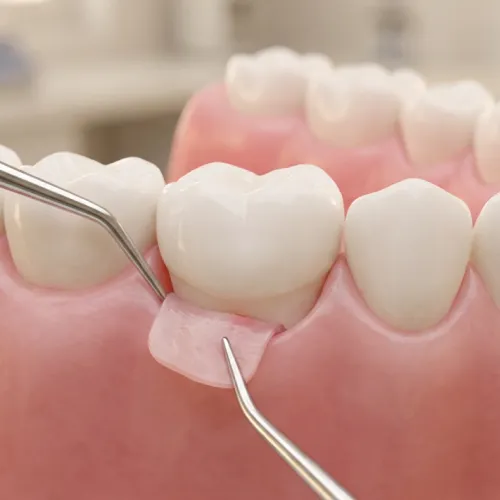
Beyond decay, an untreated crack can lead to pulp infection, abscess formation, and bone loss in the surrounding jaw. These complications don't stay confined to one tooth. Infection can spread, and bone loss can compromise the stability of adjacent teeth over time. Conditions like these often overlap with periodontics concerns, as gum and bone health are closely tied to how well a cracked tooth can be preserved.
Successful treatment seals the crack, restores structural integrity, and eliminates the bacterial pathway that drives progressive damage. Patients who address cracks early typically avoid the more complex and extensive treatments that become necessary once infection or deep structural failure sets in.
There's also a functional benefit. A properly restored tooth distributes biting forces evenly across your bite. Without that balance, neighboring teeth and the jaw joint can absorb excess stress — contributing to additional wear or discomfort over time. When a tooth cannot be saved, dental implants offer a reliable long-term solution for restoring both function and appearance.
If you've noticed pain while chewing, unexplained sensitivity, or swelling around a tooth, don't wait. The difference between a treatable crack and a tooth that can't be saved often comes down to how quickly you act.
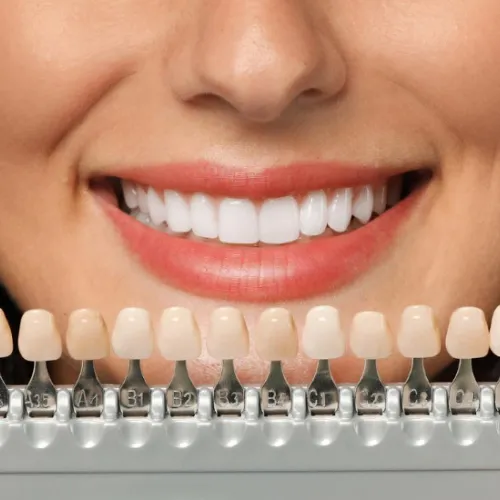
Akemi Dental Specialists serves patients throughout Encino and the San Fernando Valley. Our team is equipped to diagnose and treat cracked teeth at every stage — from minor fractures to complex restorations. We also offer cosmetic dentistry solutions to restore the appearance of your smile once structural concerns have been addressed. Contact us today to schedule an evaluation.
This article is for informational purposes only and does not constitute professional dental or medical advice. Please consult a qualified dental professional for diagnosis and treatment recommendations specific to your situation.

Dental Specialists Encino, CA
Here's what our patients are saying about us...





Mon, Fri 6:30 am - 4 pm
Tue, Thu 6:30 am - 5 pm
Wed 6:30 am - 3 pm
Sat, Sun Closed
16055 Ventura Blvd. Suite #820, Encino, CA 91436

Endodontic Care Encino, CA