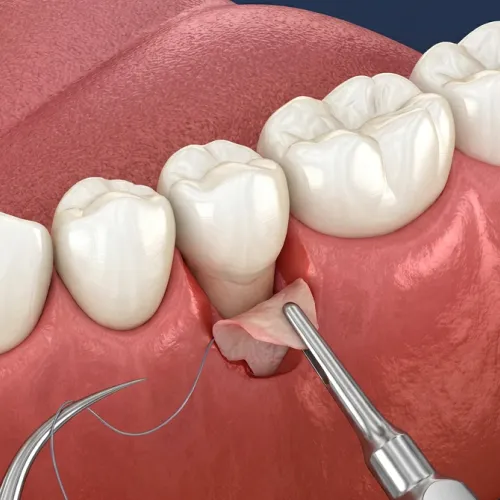
Gum Graft Disadvantages, Risks, and Pain: What Patients in Encino Should Know
Wondering about gum graft risks, pain, and drawbacks? Learn what Encino patients must know before surgery. Schedule your expert consultation with us today!
Read More

Restorative Dentistry
Losing a tooth changes more than just how your smile looks. It can affect how you chew, how clearly you speak, and even how confident you feel in everyday conversations. For many patients, the question eventually comes up: dentures or dental implants?
Both options restore missing teeth, but they do so in very different ways. One sits on top of the gums. The other becomes part of your jaw. One is removable. The other is designed to function like a natural tooth.
At Akemi Dental Specialists, we often see patients who are not sure which path makes the most sense for their lifestyle, comfort, and long-term oral health. This conversation is not about choosing what is most popular. It is about choosing what works best for you.
Let’s break it down in a practical, honest way.
Dentures and dental implants both replace missing teeth, but they interact with your mouth in completely different ways.
Dentures are custom-made prosthetic teeth that rest on the gums. They may replace several teeth or a full arch and can be removed for cleaning.
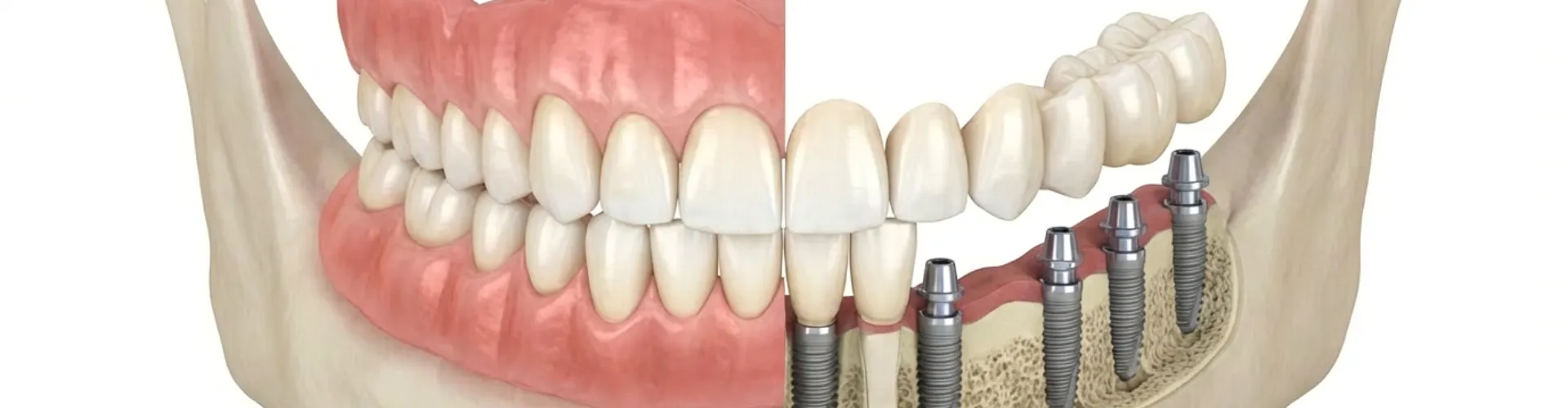
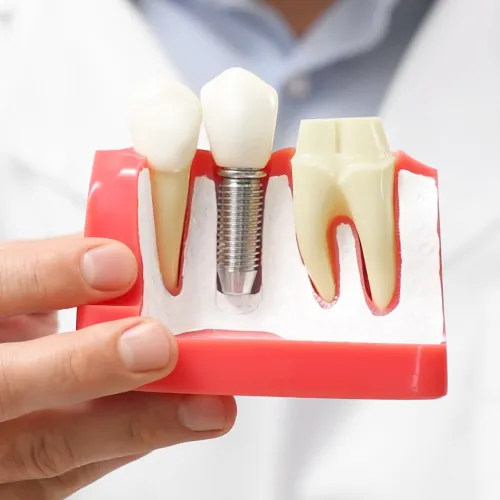
Dental implants are small titanium posts placed into the jawbone. Once healed, they support a crown, bridge, or implant-supported denture, functioning much like a natural tooth root.
The difference may sound technical, but in daily life, it becomes very noticeable.
Many patients describe implants as feeling like they have their own teeth back. That is not just a feeling. There is a structural reason behind it.
Dental implants are anchored directly into the jawbone. Once healed, they remain stable when you bite, chew, or speak. There is no shifting or movement because the implant is part of the bone.
Dentures, on the other hand, rely on the shape of your gums and jaw ridge for support. Even well-fitted dentures can move slightly, especially when eating foods that require more pressure or when speaking quickly.
This does not mean dentures are ineffective. Many people use them successfully. But for patients who value stability and predictability, implants often feel like the more natural option.
Comfort is not just about pain. It is about how something feels hour after hour.
Dentures sit on top of the gums. Over time, pressure points can develop, especially as the shape of the jaw changes. This can lead to sore spots that require adjustments.
Implants, once healed, do not rub against the gums in the same way. Because they are anchored below the surface, they tend to feel more comfortable during long meals or extended conversations.
One of the most important differences between dentures and implants is something you cannot see right away: bone health.
When a natural tooth is lost, the jawbone underneath no longer receives stimulation from chewing. Without that stimulation, the body begins to reabsorb the bone. This process is gradual but permanent.
Traditional dentures sit on the gums and do not stimulate the jawbone.
Over time, this can lead to:
This is why people who have worn dentures for many years sometimes notice that their face looks more sunken or that their dentures no longer fit as well as they once did.
Dental implants are placed into the jawbone and act like artificial tooth roots. When you chew, the implant transfers pressure to the bone, helping to maintain its strength.
This stimulation helps:
From a long-term health perspective, this is one of the strongest arguments in favor of implants.
Bone loss does not just affect how dentures fit. It also affects appearance.
As the jawbone shrinks, the lower face can appear shorter, and wrinkles around the mouth may become more pronounced. Lips may lose support.
Because implants help preserve bone, they often help maintain a more youthful facial structure over time. This is not about cosmetic vanity. It is about preserving the foundation that supports your smile.
Dentures can be a practical choice for many patients, especially when multiple teeth are missing or when budget and health factors play a role.
However, implants often become the better long-term option in specific situations.
That said, implants are not a one-size-fits-all answer.
Dentures continue to be a valuable option for many patients. They can be appropriate when:
In some cases, a combination approach may be recommended. Implant-supported dentures, for example, use a few implants to stabilize a denture, offering better comfort than traditional dentures without placing an implant for every missing tooth.
Another important consideration is how each option fits into your routine.
Implants do not require removal or soaking, which many patients find more convenient. However, they do require commitment to oral care, just like natural teeth.
It is easy to focus on the initial cost difference. Dentures often cost less upfront, while implants require a higher initial investment.
However, when considering long-term expenses, the picture can change.
Dentures may need relines, repairs, or replacements as the jaw changes. Implants, when properly placed and maintained, can last decades.
A personalized consultation helps clarify what makes the most financial sense for your situation.
Choosing between dentures and implants is not about trends or pressure. It is about understanding how each option affects your comfort, health, and confidence over time.
At Akemi Dental Specialists, we take the time to evaluate bone health, lifestyle needs, and long-term goals before making recommendations. The right choice is the one that fits your life, not just your mouth.
If you are considering dentures, dental implants, or a combination of both, the next step is a personalized consultation.
Schedule an appointment with Akemi Dental Specialists today to discuss your goals, explore your options, and create a plan that supports your smile for years to come.


Dental Specialists Encino, CA
Here's what our patients are saying about us...





Mon, Fri 6:30 am - 4 pm
Tue, Thu 6:30 am - 5 pm
Wed 6:30 am - 3 pm
Sat, Sun Closed
16055 Ventura Blvd. Suite #820, Encino, CA 91436
Endodontic Care Encino, CA